
X-Men story
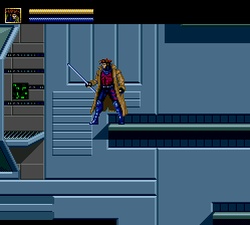
In the early ’90s, the name “X‑Men” was everywhere: bold Marvel covers at the newsstand, plastic toys, the animated series on TV — and then, out of nowhere, a club or rental shelf with a cartridge sporting those unmistakable claws on the cover. For many it was simply “that X‑Men on the Sega,” for others just “X‑Men,” and some called it the family way: “the X‑Men game on Mega Drive.” It felt like it leapt straight off the comic page into a 16‑bit world, where Wolverine growled through the TV speaker, Cyclops fired an optic blast, Gambit flicked a wrist and sent a card flying, and Nightcrawler vanished in a bamf of smoke. We grabbed a gamepad — and became a team.
From comic to cartridge
The pitch was simple and bold: bring that comic‑book energy to Sega Mega Drive (some boxes proudly said Genesis) without turning heroes into faceless sprites. The dev team, holed up with stacks of Marvel issues and storyboards, worked to nail each character’s essence. Wolverine had to feel heavy and nasty, Cyclops — focused and long‑range, Gambit — crafty and quick on the draw, Nightcrawler — slipping from enemy clutches. Even if you didn’t know English, you knew who was who: the visual language did more than any localization. That’s how an action game was born that we called X‑Men — sometimes “the X‑Men game” — always with a little grin.
The plot went straight for the fan heart: the Danger Room glitches, systems shred reality, training bots and alien tech spill out of the woodwork, and somewhere backstage Magneto’s tugging the strings. Professor Xavier’s voice comes from the ether, and you — swapping between heroes or inviting a friend on the second pad — burn a path through labs and jungles, through steel, glass, and pixel fog. And then came the flourish that made it legend: the “reboot the computer” riddle. The devs scripted a moment where salvation wasn’t another jump or punch, but pressing Reset on the actual console. Kids whispered about it at recess, proved it in game clubs on a dare, and shared it like contraband: to clear the Danger Room glitch you had to literally “reset the system.” A signature 16‑bit flex — audacious, borderline, unforgettable.
How the game won hearts
It wasn’t the licensed logo that sealed it — it was the squad vibe. While the cartoon kept X‑Men hype high, the cart let you live in their world. Two players, one TV — one slicing as Wolverine, the other lasering as Cyclops — and that lift begins: in the yard you swap “boss” stories, recall how you dropped “the spiky one,” argue who’s cooler — Gambit with the cards or Nightcrawler with the teleport. Around here the game wore plenty of nicknames — “X‑Men on Sega,” “X‑Men for the Mega” — but we all meant the same thing: a game where feel came first. Click — claws out. Click — beam fires. It was pure superhero adrenaline, piped straight into a gamepad.
The game spread fast: in the States — boxes with the classic cover, in Europe — different logos, and in our parts — rental carts with scuffed stickers and “X‑MEN” scrawled in marker. In game clubs that scrawl drew eyes like neon. Newcomers asked for “something with superheroes,” and the admin inevitably pulled this one. Word about the “final Magneto,” the “Reset trick,” and the Danger Room being not just a stage but a test for the player traveled faster than any official manual. An oral guide did the rounds: when to use powers, when to save health, where to expect a cheap shot. Phrases stuck in the lexicon — “beat X‑Men in co‑op,” “Danger Room secret,” “Magneto finale” — living search terms of our memory that still pop up today.
Its success also came from how neatly the devs fused comic spirit with game feel. Hits landed with weight, the action kept its tempo, and levels didn’t turn into a brain‑dead corridor. Instead of a dry tie‑in, it became its own thing, with bite. The soundtrack pumped with punchy chiptune, the visuals leaned into a sturdy, sometimes moody palette fit for Magneto and his crew, and frames often felt ripped right from the panels. The presence effect kicked in: you weren’t just running through pixels — you were inside the comic.
Memories of yards and clubs
In our region, “X‑Men on Sega” became a friendship check: who would carry as Wolverine, who would save the day with optics, and who would thread Nightcrawler through a gap where everyone else hit a wall. And yeah, how many restarts until someone finally said, “Let me press Reset — what if it actually works?” And it did. And the room applauded — in that cozy, home‑crowd way: “No way!” That legend got retold to little brothers alongside tall tales of “the meanest bosses” and “hidden spots.”
That’s the power of X‑Men on Mega Drive: it didn’t just adapt Marvel’s universe — it became part of ours. The cart drifted from hand to hand, house rules made up on the fly, and the name changed with the company — “X‑Men,” “the X‑Men game on Sega.” But the core held: flip the switch and you’re in Xavier’s Mansion, in the Danger Room, in the thick of a fight against enemies stronger than you. And every time that menu theme hits and the logo flares on screen, you feel that same little sting — not a claw, but nostalgia.
Today X‑Men is remembered as a game that taught us to believe in superpowers on a living‑room TV — and in ourselves: that a tough section can be beaten not only with the Attack button but with a bit of smarts. Maybe with a light tap of Reset — a reminder that sometimes you don’t reboot the level, you reboot your perspective. That’s why “X‑Men” still hits: for honest action, for the atmosphere, for that lived‑in team spirit, and for a story that spread through neighborhoods faster than any press release.